
Why August Is the Right Time to Schedule Your Child’s Eye Exam


Benefits of an August Back-to-School Eye Exam
Timing your child's eye exam for August is one of the most practical steps you can take before the school year starts. An August appointment gives you a window to act on any findings, whether that means ordering glasses, starting a treatment program, or simply confirming that your child's vision is healthy and unchanged.
When an August exam reveals that your child needs corrective lenses, you have several weeks before school begins to order glasses, allow time for adjustments, and help your child grow comfortable wearing them. Treating a newly identified condition in late summer rather than mid-September means your child enters the classroom prepared rather than catching up. That preparation can make a meaningful difference in those important first weeks.
Much of what children are asked to do in school depends directly on vision. Reading, copying from the board, completing worksheets, and following along during instruction all require clear and comfortable eyesight. When a child struggles to see, the effort of simply trying to focus can leave little energy for actual learning, leading to frustration, avoidance, and sometimes a mistaken impression that the child is struggling academically.
Vision also plays a role in social development and physical activity. Children who cannot see well may hang back from sports or games, have difficulty making eye contact, or struggle with hand-eye coordination. Addressing vision problems early supports your child's confidence and overall well-being, not just their grades.
September and October are among the busiest months for pediatric eye care appointments, as many families wait until after school starts to notice problems. Booking in August means shorter wait times, more scheduling flexibility, and visits that do not pull your child out of class. Planning ahead also reduces the chance of delays caused by cold and flu season later in the year.
Children's eyes grow along with their bodies, and summer growth spurts can shift a prescription in nearsightedness, farsightedness, or astigmatism (a common condition where the eye is not perfectly round). Even if your child had an exam earlier in the year, an August visit catches any changes that occurred over the summer so the school year starts with the clearest vision possible.
Recognizing Vision Problems in Your Child
Children often do not realize their vision is unclear because they have nothing to compare it to. As a parent, knowing what to look for at home puts you in the best position to catch problems early and bring them to our attention before they affect your child's development.
Some of the most telling signs of vision problems show up in everyday behavior. Children who squint, tilt their head, or consistently sit very close to screens and books are likely working harder than they should to see clearly. Frequent eye rubbing and complaints of headaches after reading or screen time are also worth noting.
- Squinting or covering one eye when looking at distant objects
- Sitting unusually close to the television or holding books very close to the face
- Frequent eye rubbing or blinking
- Avoiding activities that require looking at things far away or up close
Watch for shifts in your child's attitude toward reading and homework. A child who suddenly dislikes reading, frequently loses their place on the page, or avoids written assignments may be dealing with an undetected vision problem rather than a learning difficulty or lack of motivation. Difficulty concentrating or finishing tasks within a normal amount of time can also point to visual struggles.
Poor handwriting, skipping lines while reading, or reversing letters beyond the age when that is typical may indicate problems with eye coordination. These signs are especially important to act on if they appear suddenly or worsen over time. A comprehensive eye exam can help determine whether vision is contributing to any of these academic challenges.
Children sometimes describe tired eyes, blurry vision, or seeing double, particularly after extended reading or screen use. These complaints may come and go, but even occasional symptoms deserve a professional evaluation to rule out underlying conditions. Do not dismiss what your child says about how their eyes feel, especially if the complaints are consistent.
- Headaches that occur during or after visual tasks
- Eye discomfort or a feeling of eye fatigue
- Sensitivity to light
- Watery or red eyes without signs of infection
In infants and toddlers, vision problems may appear as delayed crawling, poor hand-eye coordination, or limited interest in faces and colorful objects. Preschoolers might struggle with puzzles, coloring within lines, or recognizing shapes and letters at an age when peers are managing these tasks comfortably. These developmental differences can sometimes trace back to vision issues that a comprehensive exam can identify.
School-age children and teenagers often hide vision difficulties because they genuinely do not know that their experience of seeing is different from anyone else's. They may compensate by relying on memory or listening rather than reading. Scheduling regular exams helps us catch problems even when children are not aware of or not reporting any symptoms.
Some symptoms require prompt care rather than a routine appointment. Seek immediate medical attention if your child experiences sudden vision loss, severe eye pain, or a sudden increase in floaters accompanied by flashes of light or a shadow in their vision. New-onset crossed eyes, bulging of one or both eyes, or pupils of noticeably different sizes also need to be evaluated without delay.
For chemical splashes to the eye, rinse immediately and thoroughly with clean water or saline for several minutes and go to an emergency facility right away. Eye injuries, foreign objects in the eye, and significant light sensitivity with redness and pain are always urgent situations. Sudden double vision, drooping of an eyelid, or pupils that do not react to light can indicate a serious neurological concern and should not wait for a scheduled appointment.
Risk Factors for Childhood Vision Problems
Some children are at higher risk for developing vision problems, and knowing those risk factors helps us tailor how often and how thoroughly we monitor your child's eyes. If any of the following apply to your child, be sure to share that information during the exam so we can provide the right level of care.
Children with a parent or sibling who wears glasses or has an eye condition are more likely to develop similar issues. Nearsightedness, farsightedness, astigmatism, amblyopia (commonly called lazy eye), and misaligned eyes all tend to run in families. Knowing your family's eye health history helps us watch for specific conditions and schedule monitoring accordingly.
More serious inherited conditions such as childhood glaucoma, early cataracts, or certain retinal diseases are less common but can also affect children. If your family has a history of these conditions, we may recommend more frequent exams or specific diagnostic testing. Early monitoring allows us to act quickly when intervention is needed.
Babies born prematurely or with low birth weight face a higher risk for vision problems, including retinopathy of prematurity (damage to the blood vessels in the back of the eye), refractive errors, and strabismus (misaligned eyes). Developmental delays and neurological conditions can also affect how the visual system matures. We recommend earlier and more frequent exams for children with these risk factors.
Children who experienced birth complications, required supplemental oxygen, or spent time in neonatal intensive care should receive careful vision monitoring even if early screenings were normal, because some problems emerge gradually as the visual system develops.
Extended use of digital devices can cause eye strain and is associated with the development and progression of nearsightedness in children. Symptoms of digital eye strain include tired eyes, headaches, blurred vision, and difficulty refocusing between near and distant objects. Regular breaks and reasonable limits on recreational screen time support healthier visual development.
- Follow the 20-20-20 rule: every 20 minutes, look at something 20 feet away for 20 seconds
- Position screens at arm's length and slightly below eye level
- Make sure lighting in the room reduces glare on the screen
- Encourage regular breaks for physical activity and outdoor play
Children with diabetes need regular eye exams to monitor the retina for changes over time. The appropriate exam schedule depends on the type of diabetes, how long your child has had the condition, and individual factors that we discuss in coordination with your child's medical team. Sudden vision changes in a child with diabetes should always be evaluated promptly.
Severe allergies can lead to chronic eye rubbing, which in some children may contribute to changes in the shape of the cornea over time. Conditions such as juvenile arthritis, Down syndrome, and certain genetic syndromes also carry an increased risk for eye problems. Letting us know about any ongoing health conditions ensures that your child receives eye care that is coordinated with the rest of their medical care.
What Happens During a Pediatric Eye Exam
A comprehensive pediatric eye exam is more thorough than the quick vision checks done at schools or pediatrician offices. Understanding what to expect helps both you and your child feel comfortable and prepared, and knowing what we look for helps you appreciate the value of regular professional evaluation.
School screenings and pediatric office checks typically assess only distance vision, and they often miss problems with focusing ability, eye coordination, and overall eye health. A child can pass a school screening and still have a significant vision problem. A comprehensive eye exam evaluates all of these areas and provides a complete picture of how your child's eyes are working and whether they are healthy.
Our comprehensive exam includes testing for nearsightedness, farsightedness, astigmatism, eye muscle coordination, focusing ability, and eye health. We also screen for amblyopia and color vision deficiency, two conditions that routine screenings frequently miss. Regular comprehensive exams are the standard of care for children, even those who appear to see well.
Talking to your child ahead of time in simple, positive terms makes a real difference in how smoothly the appointment goes. Let them know that the eye doctor will use special tools to check how well they can see and to make sure their eyes are healthy, and reassure them that the tests do not hurt. Bringing a favorite toy or book and letting your child know you will be with them during the exam helps younger children feel more at ease.
Before the visit, write down any symptoms, behavioral changes, or concerns you have noticed, along with information about your family's eye health history, your child's current medications, and any ongoing health conditions. Having that information ready helps us give your child the most thorough and appropriate care.
We may use dilating eye drops during the exam to relax the focusing muscles and widen the pupils. These drops allow us to measure your child's prescription more accurately and to examine the internal structures of the eye, including the retina and optic nerve, in much greater detail than is possible without dilation. For young children especially, dilation is an important part of getting an accurate prescription and assessing overall eye health.
After the drops are applied, your child may experience some temporary effects that fade within a few hours.
- Blurred vision, particularly for tasks up close such as reading
- Increased sensitivity to bright light and glare
- Mild stinging when the drops are first applied
Bringing sunglasses or a hat for the ride home helps with light sensitivity. Please let us know in advance if your child has had any previous reactions to eye drops.
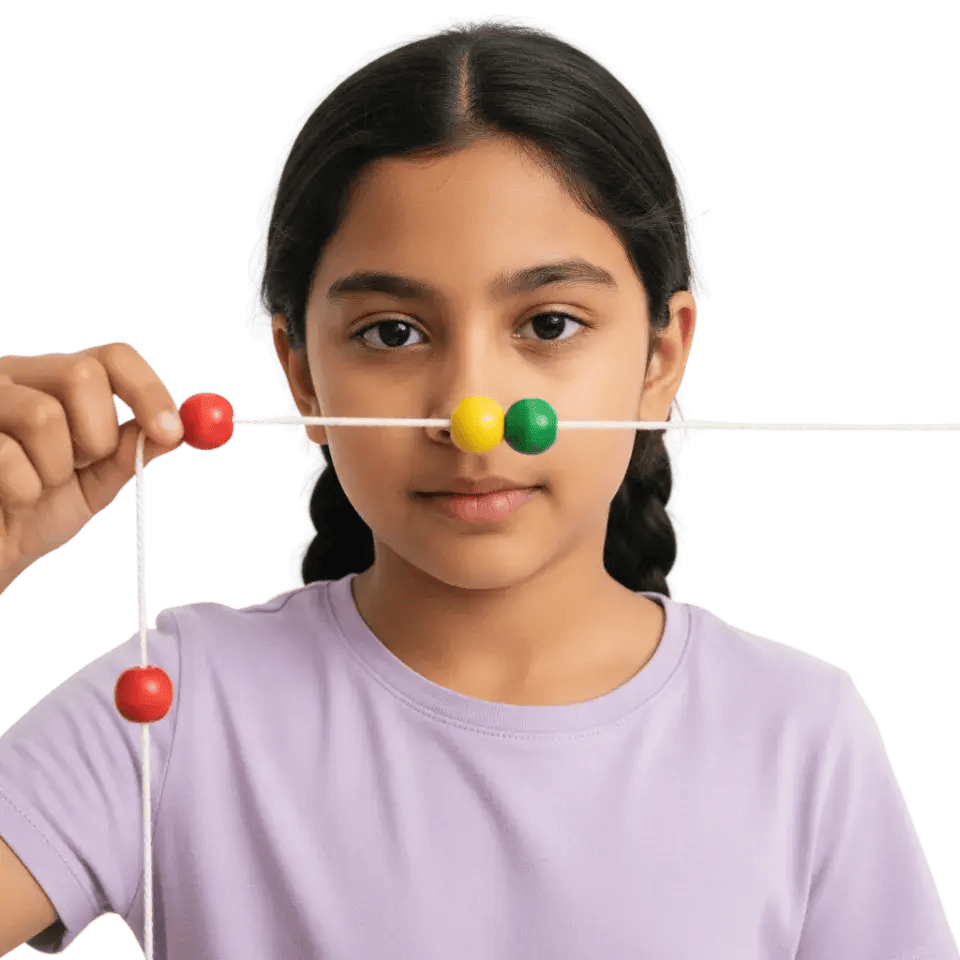
We use techniques specifically designed for babies and young children who cannot yet read letters or respond to traditional vision tests. These methods allow us to evaluate how the eyes align, how well they track moving objects, and how they respond to visual stimuli, all without requiring any verbal response from your child.
- Pupil response and eye movement evaluation
- Fixation and following tests using lights or toys
- Retinoscopy to measure refractive error objectively
- Eye health examination with child-friendly instruments
Even very young children can receive a thorough and meaningful eye exam. We are experienced in making these visits comfortable for babies, toddlers, and their parents.
Older children typically read letters or identify shapes on an eye chart to measure their visual acuity, or sharpness of vision, at both near and far distances. We test each eye separately and together to understand how they work as a team. Refractive testing helps us determine the exact prescription needed for clear, comfortable vision.
We also evaluate eye teaming, tracking, and focusing skills that are essential for reading and classroom learning. Color vision testing, depth perception checks, and a thorough examination of eye health round out the visit. Together, these tests give us a complete understanding of your child's visual capabilities and any areas that may need support.
Treatment Options for Children's Vision Problems
When we identify a vision problem, we work with you and your child to find the most appropriate and manageable treatment. Most childhood vision conditions respond well to one or more of the options below, and we guide families through every step of the process.
Glasses remain the most common and effective treatment for refractive errors such as nearsightedness, farsightedness, and astigmatism. Modern frames designed for children are durable and comfortable, and polycarbonate lenses offer impact resistance and UV protection that make them well suited for active kids. Many children enjoy picking out their own frames, which encourages them to wear their glasses consistently.
We help you select frames that fit your child's face properly, since a well-fitting pair stays in place during activities and provides the clearest vision. If your child needs glasses for amblyopia in addition to a refractive error, we will explain how the prescription works alongside any other treatment.
Some children are ready for contact lenses at a younger age than many parents expect. Maturity, hygiene habits, and motivation are generally more important than age alone when determining readiness. We assess each child individually to decide whether contact lenses are appropriate and, if so, which type is the best fit.
Daily disposable lenses are often the most practical and lowest-risk option for younger wearers, since a fresh sterile lens is used each day with no cleaning solution required. While daily disposables reduce the risk of infection compared to lenses that are reused and cleaned, they do not eliminate that risk entirely. We provide thorough instruction on proper insertion, removal, and care.
- Never sleep in lenses unless they are specifically prescribed for overnight wear
- Keep lenses away from all water, including tap water, swimming pools, and showers
- Always wash and dry hands before handling lenses
- Stop wearing lenses immediately and contact us for any eye pain, redness, discharge, light sensitivity, or change in vision
- Replace lens cases regularly when using reusable lenses
Myopia control refers to treatments designed to slow the progression of nearsightedness during childhood. This matters because high myopia is associated with a greater risk of serious eye conditions later in life, including retinal problems and glaucoma. The goal is not to reverse nearsightedness but to reduce how quickly it worsens during the years when the eye is still growing.
We offer MiSight specialty contact lenses and low-dose atropine eye drops as myopia management options, both of which are named on our services. Increased time outdoors also appears to help slow progression. The right approach depends on your child's age, current prescription, rate of progression, and lifestyle, and we discuss all of these factors with you before recommending a plan. Children in myopia management programs typically need more frequent visits than annual exams so we can track changes and adjust treatment as needed.
For children diagnosed with amblyopia (commonly called lazy eye), patching the stronger eye for prescribed periods each day encourages the brain to strengthen its connection with the weaker eye. Success depends significantly on starting treatment early and following the recommended schedule consistently. We monitor progress closely and adjust the plan as your child's vision improves.
In specific cases, surgery may be considered for conditions such as strabismus (misaligned eyes) or childhood cataracts that do not respond adequately to other treatments. We discuss the benefits, risks, and realistic expectations fully before recommending any surgical intervention. Most childhood vision problems can be managed effectively without surgery, but it remains an important option when medically necessary.

Supporting Your Child's Vision Between Visits
The habits your child builds at home play an important role in protecting their eye health between exams. Small changes to the study environment, daily routines, and time spent outdoors can add up to meaningful benefits over the course of a school year and beyond.
Good lighting is one of the most straightforward ways to reduce eye strain during homework and reading. Bright, even light that eliminates shadows without creating glare on screens or paper is ideal. Positioning a desk lamp to the side rather than directly overhead helps minimize reflections.
- Make sure the study area has adequate general and task lighting
- Position reading material at a comfortable distance, roughly 16 inches from the eyes
- Adjust chair and desk height so your child's feet rest flat and their arms are at a natural angle
- Reduce screen glare by adjusting the screen angle and room lighting
Limiting recreational screen use and encouraging regular breaks helps reduce digital eye strain. The 20-20-20 rule is a simple and effective habit: every 20 minutes of screen time, look at something 20 feet away for 20 seconds to give the eyes a rest. Setting screen-free periods before bedtime supports both eye health and sleep quality.
Posture and screen positioning also matter. Screens should be at roughly arm's length, with the top of the screen at or slightly below eye level. Remind your child to blink regularly during screen use, since people tend to blink less when looking at a screen, which can lead to dry and uncomfortable eyes over time.
Time spent outdoors appears to offer protection against the development and progression of nearsightedness in children. Natural light exposure and the visual experience of looking at objects at varying distances provide a kind of visual variety that indoor activities often do not. Aiming for at least one to two hours of outdoor time daily, when possible, is a practical and enjoyable goal for most children.
Outdoor activities such as sports, playground time, and nature walks all contribute to this goal while also supporting physical and mental health. Balancing outdoor and indoor time creates healthier visual habits that may have lasting benefits as your child grows.
Children who wear glasses or contacts generally benefit from annual eye exams to monitor vision changes and update prescriptions as needed. Those participating in myopia management programs or being monitored for specific eye conditions will need more frequent visits, and we provide a personalized schedule based on your child's individual situation.
Do not wait for a scheduled exam if you notice new symptoms such as eye pain, redness, discharge, sudden vision changes, or any change in how your child is using their eyes. Prompt evaluation of new symptoms allows us to catch and address problems early, which is almost always better for outcomes than waiting.
Frequently Asked Questions
These questions come up often from parents planning their child's first exam or wondering what to expect. If your question is not answered here, our team is happy to help when you call or visit.
We recommend a first comprehensive eye exam at six months of age, with follow-up exams at around age three and again before starting kindergarten. These early exams establish a baseline and identify issues that are not visible to parents and are often missed by basic screenings. Children with known risk factors such as premature birth, family history of eye conditions, or developmental concerns may need earlier or more frequent evaluations.
Yes. School screenings check only basic distance vision and typically take just a few minutes. They are not designed to detect problems with near vision, eye coordination, focusing ability, or eye health. A child who passes a screening can still have amblyopia, convergence problems, or early eye disease that requires treatment. A comprehensive exam is the only way to assess all of these areas thoroughly.
This is one of the most common misconceptions we hear from parents, and the answer is no. Glasses correct the eye's focusing error but do not change the underlying structure of the eye or make it depend on the lenses over time. Prescription changes that occur as a child grows reflect normal eye development, not any effect of wearing glasses. Children who need glasses will see and learn better when they wear them consistently.
Myopia control uses specific treatments to slow how quickly nearsightedness progresses during childhood, with the goal of reducing the risk of high myopia and its associated health consequences later in life. Not every nearsighted child requires it, but we consider it for children whose prescription is increasing quickly, who developed nearsightedness at an early age, or who have a strong family history of high myopia. The decision is made during the exam after reviewing your child's specific situation, and we explain all available options before recommending a plan.
Resistance to wearing glasses is common, especially in younger children, and it is worth mentioning at the follow-up visit so we can help troubleshoot. Often the issue is fit, comfort, or style, all of which can be adjusted. Children whose glasses genuinely improve their vision typically become more willing to wear them once they experience the difference. If there is a specific condition such as amblyopia where consistent wear is critical to treatment success, we discuss strategies to encourage cooperation during the visit.
Schedule Your Child's Eye Exam at Associated Eye Physicians & Surgeons of New Jersey
Associated Eye Physicians & Surgeons of NJ has been caring for families across New Jersey for nearly 40 years, and our team is here to make sure your child starts every school year with the clear, comfortable vision they deserve. We offer comprehensive pediatric eye exams in a welcoming environment where children feel comfortable and parents leave with the information they need. We look forward to partnering with your family and supporting your child's vision, learning, and development at every stage of their growth.

It was easy to make an appointment and there was minimal wait time within the office.
Debra Kradjian Stephans
Dr.Taj Khan is a very good surgeon
Chandrawatie Persaud
The best eyecare doctors and nurses I have had all my life.
Lloyd Harilall
Dr. Garrana is fantastic! She gave very clear and thoughtful instructions for pre and post surgery. she is very responsive even outside of office hours. I Would highly recommend if anyone wants to get lasik surgery.
Lynn W.
Professional staff, efficient, respectful of my time, courteous, felt very comfortable and at ease. Dr. Hosler is a good listener, answered all my questions, took his time, did not make me feel like I was being rushed out. Very good experience. Thank you!!
Audrey Parker